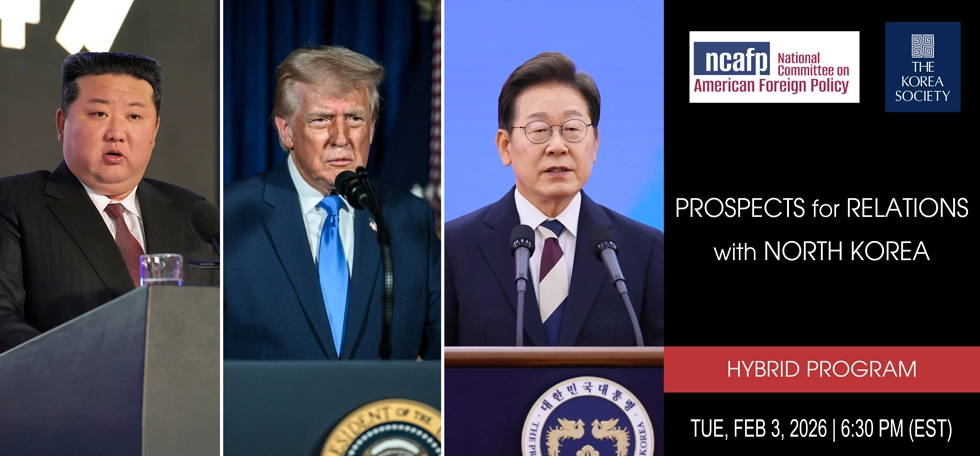
Beyond Diplomacy: Unpacking Decades of Hostile US-North Korea Ties
The relationship between the United States and North Korea, officially the Democratic People's Republic of Korea (DPRK), is arguably one of the most volatile and complex geopolitical dynamics of the modern era. Defined by decades of mutual distrust, confrontation, and the looming specter of nuclear weapons, understanding the intricacies of these **north korea us relations** is crucial for grasping the stability of the Korean Peninsula and broader East Asian security. With no formal diplomatic ties and a history deeply scarred by conflict, communication often relies on indirect channels and high-stakes brinkmanship.
A Legacy of Hostility: Tracing the Roots of Tension
The deep-seated animosity between North Korea and the United States did not emerge overnight; it is a direct legacy of the devastating Korean War (1950-1953), where both nations fought on opposing sides. The war ended with an armistice, not a peace treaty, leaving the two Koreas technically still at war and the US maintaining a significant military presence in the South. This historical backdrop has fostered an environment of perpetual tension, complicated by North Korea's subsequent development of nuclear weapons and long-range missiles.
Today, formal diplomatic relations between the US and the DPRK are non-existent. Instead, an intriguing indirect diplomatic arrangement is in place. The Swedish Embassy in Pyongyang acts as the US protecting power, offering limited consular services to American citizens. Conversely, North Korea does not maintain an embassy in Washington, D.C.; its representation in the United States comes through its mission to the United Nations in New York City, which effectively serves as its de facto embassy.
Areas of contention in **north korea us relations** are numerous and deeply entrenched. These include:
- North Korea's illicit nuclear weapons program and continuous missile tests.
- Allegations of severe human rights abuses within North Korea.
- Extensive US economic sanctions imposed on the DPRK to curb its WMD ambitions.
- Joint military exercises conducted by the US and South Korea, which Pyongyang views as provocative.
- North Korea's demands for the United States to eliminate its nuclear arsenal capable of reaching the Korean Peninsula.
Despite the lack of formal ties, both sides have historically maintained contact through various channels to manage and de-escalate tensions, especially during periods of heightened crisis. The ultimate goal, as articulated by the US State Department, remains "Peace and prosperity on the Korean Peninsula."
Kim Jong Un's Stance: Conditional Overtures and Nuclear Ambitions
In recent years, the trajectory of **north korea us relations** has been heavily influenced by the pronouncements and actions of North Korean leader Kim Jong Un. Kim has consistently framed the future of relations as entirely dependent on Washington's attitude, often demanding a fundamental shift in US policy. During a recent party congress, he stated, "If the US withdraws its policy of confrontation with North Korea by respecting our country's current status... there is no reason why we cannot get along well." This conditional olive branch underscores Pyongyang's desire for the US to acknowledge its status as a nuclear power, rather than solely focusing on denuclearization.
While Kim Jong Un famously met with US President Donald Trump on three occasions, marking an unprecedented period of high-level engagement, these interactions ultimately failed to yield a lasting breakthrough, and Kim has since rejected overtures for further meetings. Instead, North Korea has doubled down on its military development. The recent party congress outlined ambitious five-year policy goals, culminating in a military parade that showcased Pyongyang's expanding arsenal. Kim explicitly declared a "prospective to strengthen our national nuclear force," vowing to "increase the number of nuclear weapons and expand nuclear operational means and space for use." This commitment to enhancing its nuclear capabilities fundamentally shapes the ongoing diplomatic stalemate. For a deeper dive into these recent declarations, read our article
Kim Jong Un's Ultimatum: US Relations & Nuclear Ambitions.
Historically, North Korea has demonstrated its nuclear resolve through action, conducting six nuclear weapons tests between 2006 and 2017. Furthermore, it has successfully developed long-range missiles capable of striking targets thousands of miles away, potentially reaching the continental United States. This growing capability significantly elevates the stakes in any future negotiations, making the task of denuclearization exponentially more challenging.
The South Korean Factor: "Most Hostile Enemy" and Dismissed Détente
Adding another layer of complexity to **north korea us relations** is Pyongyang's increasingly hostile stance towards South Korea. Kim Jong Un recently declared South Korea as Pyongyang's "most hostile enemy," a stark reversal from previous periods of inter-Korean dialogue. He explicitly ruled out any discussions with Seoul, dismissing recent signals of détente from the South as "deceptive." Kim unequivocally stated that North Korea had "absolutely no business" dealing with the South, with whom it is technically still at war.
In a significant ideological shift, Kim announced that the North no longer considered the South as "compatriots," having "permanently excluded" them from that category. This rhetoric suggests a hardening of Pyongyang's position, indicating a potential long-term freeze in inter-Korean relations and a diminished role for Seoul as an intermediary in US-DPRK talks. Kim further warned of "arbitrary action" if Seoul were to conduct what he termed "obnoxious behavior," threatening that "South Korea's complete collapse cannot be ruled out." This aggressive posture towards its neighbor undoubtedly complicates any efforts by the US to foster regional stability. To understand the full implications of this shift, explore
North Korea's New Policy: Kim's Stance on US & Hostile South Korea.
The Diplomacy Dilemma: Navigating a Path Forward
The enduring challenges in **north korea us relations** stem from a profound trust deficit and fundamentally divergent priorities. For Pyongyang, its nuclear program is perceived as a critical deterrent against perceived US aggression and a guarantee of its regime's survival. For Washington, denuclearization remains the ultimate objective, viewed as essential for regional and global non-proliferation efforts. The heavy US military presence in South Korea and regular joint US-South Korea military exercises in the South China Sea are seen by North Korea as direct threats, fueling its need for a stronger deterrent. Conversely, the US views these deployments as vital for regional security and deterrence.
Navigating this diplomatic minefield requires careful consideration and a nuanced approach. While the overarching goal is peace, the practical steps towards achieving it are fraught with difficulty.
- Understanding Motivations: Both sides must acknowledge and attempt to understand the core motivations driving the other's actions, even if they disagree with them. North Korea's pursuit of nuclear weapons is deeply intertwined with its security concerns and national pride.
- Channels for Communication: Even without formal ties, maintaining back channels and indirect communication is vital to prevent miscalculation and de-escalate potential crises. The role of neutral intermediaries like Sweden remains crucial.
- Sanctions and Incentives: US economic sanctions are designed to pressure North Korea, but finding the right balance between pressure and offering credible incentives for denuclearization remains a perpetual challenge. Overly harsh sanctions without a clear diplomatic off-ramp can further entrench Pyongyang's position.
- Confidence-Building Measures: Incremental steps, such as limited humanitarian aid, joint efforts on specific non-political issues, or even scaled-back military exercises, could potentially build minor confidence over time, though these are currently difficult to envision given Kim's recent rhetoric.
Ultimately, any meaningful progress in **north korea us relations** will likely require a departure from past cycles of confrontation and stalled dialogue. It demands a willingness from both sides to engage in genuine, albeit difficult, diplomacy, recognizing that a complete breakthrough may be a long and arduous process, but de-escalation is a constant necessity.
The complex and often tense nature of **north korea us relations** continues to demand global attention. From its origins in the Korean War to present-day nuclear posturing and rhetorical hostilities, the path to peace and denuclearization on the Korean Peninsula remains elusive. Kim Jong Un's unwavering commitment to expanding his nuclear arsenal, coupled with his dismissal of rapprochement with South Korea and conditional demands for the US, paints a picture of entrenched positions. While the ultimate goal for the United States is peace and prosperity, achieving it will require innovative diplomacy, consistent engagement, and a profound understanding of the historical grievances and security imperatives that continue to shape this critical international relationship.