Kim Jong Un's Defined Path: North Korea's Stance on US Relations and a "Hostile" South Korea
The geopolitical landscape surrounding the Korean Peninsula has once again been reshaped by the definitive pronouncements from North Korean leader Kim Jong Un. Concluding the significant Workers' Party congress, Kim laid out a stark vision for his nation's future, one that explicitly ties the fate of
North Korea US relations to Washington's actions and definitively severs any lingering pretense of reconciliation with South Korea. His declarations signal a critical juncture, highlighting Pyongyang's unwavering commitment to its nuclear arsenal and a deeply entrenched confrontational posture.
Kim Jong Un's Conditional Overture to the United States
In a move that underscores the complex dance of power and diplomacy, Kim Jong Un stated that the future of relations with the United States hinges entirely on Washington's attitude. According to state news agency KCNA, Kim asserted that "if the US withdraws its policy of confrontation with North Korea by respecting our country's current status... there is no reason why we cannot get along well." This statement, while seemingly conciliatory, carries a significant precondition: the US must acknowledge North Korea as a nuclear power and abandon its long-standing policy of pressure and sanctions.
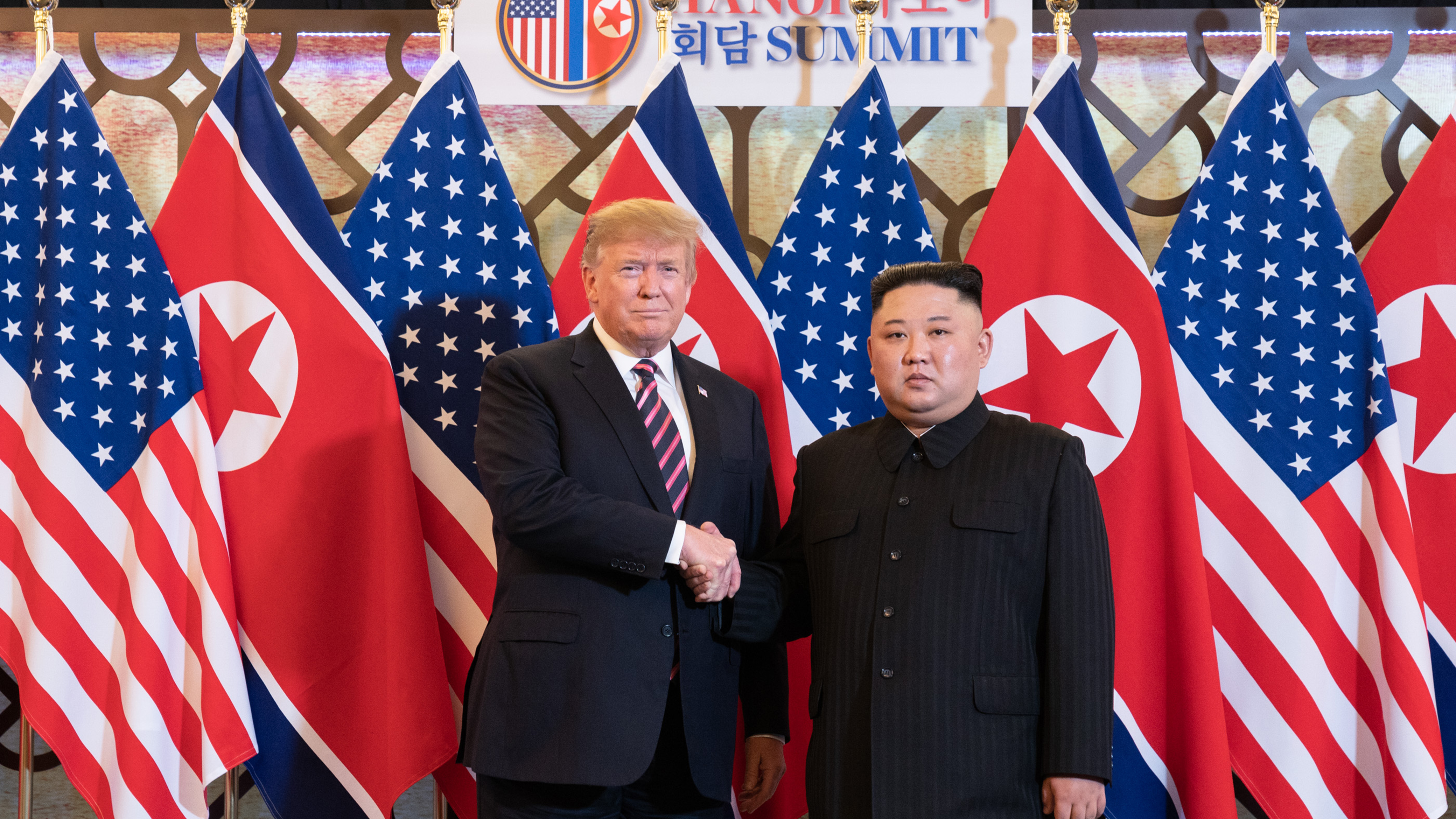
This conditional openness stands in contrast to past engagements. Kim Jong Un famously met with former US President Donald Trump on three separate occasions, marking unprecedented high-level diplomatic contact. Yet, despite these historic summits, no lasting breakthroughs were achieved, and Kim has since rejected overtures for a fourth meeting. This rejection signals a perceived lack of sincerity or tangible results from previous talks, pushing North Korea to demand a fundamental shift in the US approach rather than merely continuing episodic dialogues. The implications for future negotiations are profound, suggesting that Pyongyang will only engage if the terms fundamentally change to acknowledge its self-proclaimed status. Understanding this intricate balance is crucial for anyone following the evolving dynamics of
Kim Jong Un's Ultimatum: US Relations & Nuclear Ambitions and its potential impact on global stability.
A Nuclear-Armed Future: North Korea's Strategic Imperative
At the heart of North Korea's new policy goals, set for the next five years, is an uncompromising commitment to strengthening its national nuclear force. Kim Jong Un explicitly stated the intent to "on projects to increase the number of nuclear weapons and expand nuclear operational means and space for use." This declaration removes any ambiguity regarding North Korea's strategic direction: it views its nuclear arsenal not as a bargaining chip to be relinquished, but as a fundamental pillar of its national security and deterrent capability.
This strategic imperative is rooted in a history of perceived threats and the belief that only a robust nuclear deterrent can safeguard the regime. North Korea has conducted six nuclear weapons tests between 2006 and 2017, and has developed long-range missiles capable of striking targets thousands of miles away, potentially reaching the continental United States. The pronouncement to not only maintain but *increase* these capabilities sends a clear message to the international community: denuclearization, as conventionally understood by the US and its allies, is not on Pyongyang's immediate agenda. Instead, North Korea appears to be solidifying its status as a de facto nuclear state, aiming to force other powers to adapt to this reality. This focus on nuclear expansion will undoubtedly complicate any future attempts to improve
North Korea US relations, placing a heavy burden on diplomatic efforts seeking a peaceful resolution.
South Korea: The "Most Hostile Enemy" and Permanent Exclusion
Perhaps the most dramatic and concerning shift in North Korea's recent pronouncements concerns its relationship with South Korea. Kim Jong Un definitively ruled out any discussions with the South, describing it as Pyongyang's "most hostile enemy." This aggressive rhetoric marks a significant escalation, departing from previous periods where at least the *pretense* of inter-Korean dialogue was maintained, even if fraught with challenges.
Kim threatened to "initiate arbitrary action" if Seoul were to conduct what he called "obnoxious behavior," going as far as to say that "South Korea's complete collapse cannot be ruled out." He dismissed recent signals of détente from the South as "deceptive" and unequivocally stated that North Korea had "absolutely no business" dealing with the South, with whom it is technically still at war. The most profound ideological shift came with Kim's declaration that the North no longer considered the South as "compatriots," having "permanently excluded" them from that category. This ideological divorce has far-reaching implications, potentially justifying more aggressive actions by Pyongyang without the internal or external constraint of shared ethnicity. For Seoul, this poses an unprecedented challenge, demanding a re-evaluation of its strategies for inter-Korean engagement and defense in the face of such outright hostility. The abandonment of "compatriot" status signals a hardening of resolve that leaves little room for traditional engagement.
Navigating the Complexities of North Korea-US Relations
The historical backdrop to
North Korea US relations is one of deep-seated tension and hostility, tracing back to the Korean War. The two nations have never established formal diplomatic relations, instead relying on indirect arrangements. The Swedish Embassy in Pyongyang serves as the US protecting power, offering limited consular services to US citizens, while North Korea's mission to the United Nations in New York City acts as its de facto embassy in the United States. This diplomatic distance underscores the persistent mistrust and lack of direct communication channels.
Areas of contention between the two nations are numerous and complex. North Korea's nuclear weapons program and its frequent missile tests are consistently at the forefront of global concerns. Compounding this are issues such Korea's human rights record, stringent US economic sanctions against Pyongyang, and the recurring joint military exercises conducted by the US and South Korea, which North Korea views as provocative. Despite these profound hostilities, both sides have maintained episodic contact in the past, primarily aimed at de-escalating immediate tensions. The stated policy objective of the US State Department remains "Peace and prosperity on the Korean Peninsula," a goal that seems increasingly distant given Kim Jong Un's recent declarations.
The current state of affairs is characterized by a heavy US military presence in South Korea, alongside joint US-South Korea military exercises, which fuel North Korea's security paranoia. Pyongyang, in turn, demands that the United States eliminate its nuclear arsenal that could reach the Korean Peninsula, viewing it as a prerequisite for any meaningful de-escalation. This intricate web of demands, threats, and military postures creates a volatile environment, making any progress in improving
North Korea US relations an immense diplomatic challenge. To delve deeper into the historical context and challenges, explore
Beyond Diplomacy: Unpacking Decades of Hostile US-North Korea Ties. The challenge for international diplomacy lies in finding leverage points that can encourage dialogue without legitimizing North Korea's nuclear ambitions, a task that requires careful calibration of pressure and potential incentives.
Conclusion
Kim Jong Un's recent policy pronouncements have cast a long shadow over the future of the Korean Peninsula and global security. By conditioning
North Korea US relations on Washington abandoning its "policy of confrontation" and emphatically rejecting engagement with South Korea, Pyongyang has drawn clear, stark lines. The commitment to expanding its nuclear arsenal signals a hardening of its strategic posture, emphasizing self-reliance and deterrence above denuclearization. The abandonment of "compatriot" status for South Korea represents a significant ideological shift, potentially paving the way for further aggressive actions. As the world grapples with a nuclear-armed North Korea determined to dictate the terms of its engagement, the path forward remains fraught with peril, demanding a nuanced and resilient approach from the international community to prevent escalation and secure lasting stability in one of the world's most volatile regions.